A Word from Pastor Jay

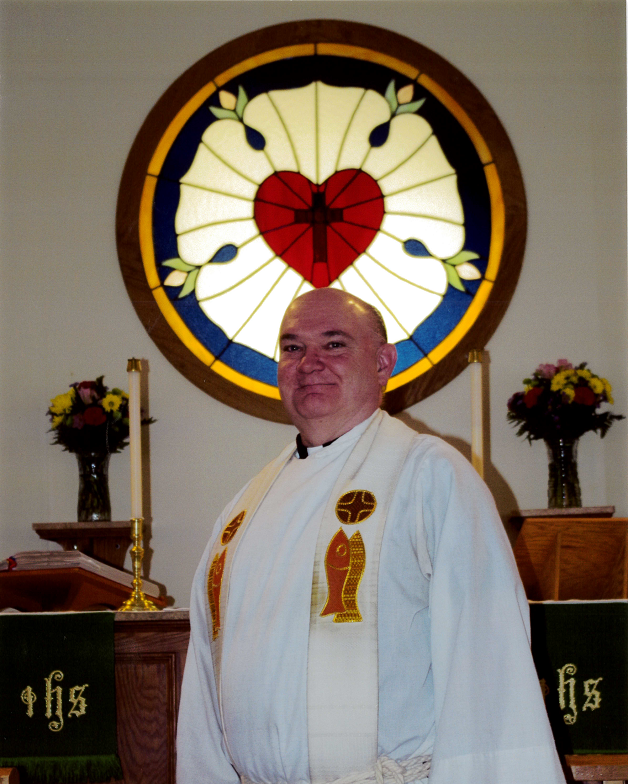
As the United States prepares to celebrate Independence Day and the 250th anniversary of the signing of the Declaration of Independence, I pray that this time of celebration and reflection is meaningful and thought-provoking for each of you. As a way of bringing our Lutheran heritage into view as we approach this landmark event, I thought it might be of interest to share some of Martin Luther’s thoughts on the relationship between the Church and the State. Luther is famous for creating what is known as the “Two Kingdoms” or “Two Realms” theology which attempts to describe how God acts in the world through human institutions. Luther, upon reading Scripture and contemplating human society in its setup and function, discerned that God is at work in the way we humans order our lives. In fact, God created these orders so that we can live our lives relatively free from chaos and disorder and find the hand of God at work in the places where we live our lives. These Godordained orders are a blessing to us from God meant to create the necessary foundations upon which we humans can live and work and worship and enjoy the hands of God at work providing us with the structures we need to promote daily living.
The first realm, for Luther, is the Spiritual Realm. This is the realm in which the Church functions as the hand of God active in fulfilling its commission of preaching the Word of God, administering the Sacraments, sharing God’s grace, calling the faithful to lives of service, reaching out through Law and Gospel to proclaim the message of God’s saving works for God’s people. For Luther, it is the Church’s mission to share the fulness of the Gospel, and Christ instituted the Church to be the vehicle through which this message is proclaimed. The Church alone has the full authority, given to it by God through Christ, to shape itself to ensure that Word and Sacrament are shared and God’s good news is made known. For Luther, the worldly powers of government should not encroach on these duties or tasks of the Church.
The second realm, for Luther, is the Realm of Civil Authority. Government in all its institutions is created by God for the benefit of humans to provide society with order through the Law so that all may benefit in relative peace and security. Of course, Luther knew very little of democracy, as government in his time was the province of princes and kings. Luther saw, however, how the church’s encroachment on this realm often led to theocratic results. Government best functions as an institution separated from clerical rule by providing benefits to citizens through discerning government leaders, court systems, police and other forces which secured peace for its citizens and dealt with those who were a danger to society. Of course, government was smaller in that time, prior to all of the agencies and systems we have today. For Luther, this civil realm should not encroach on the work of the Church to proclaim the Gospel, to forgive sins, and to actively work in the world to share God’s love.
In this theology was planted some seeds which, during the Enlightenment, would grow into some of the ideas which became part of our modern framework of a state which does not govern the inner workings of the church and a church which does not rule over the people as a government. In Luther’s time, neither of these possibilities was assured. Popes went to war and ruled kingdoms and kings enforced the edicts of the church.
For Luther, who was an orderly thinker, this way of proper identification for the realms through which God works in the world made sense. Of course, the church always had the privilege of voicing concerns when the government moved in ungodly directions, and the individual Christian, who lived in both realms, had the duty to influence the government leaders in setting up society in a way that better mirrors God’s justice. While these ideas may seem rather tame by modern standards, in Luther’s time these thoughts were radical, and helped to shape streams of thinking which would change the way societies would be built in future years.
Both church and civil society are amazing gifts from God to be celebrated, even though both are tainted by sin. As we move toward our celebration of the Declaration of Independence over the coming days, we do so with open eyes, knowing neither church nor state is perfect, but that the most inspirational and aspirational ideas of both guide us and continue to give us a deep gratitude to God, who has blessed us with these as gifts out of love for us.
-
Location
-
Mailing Address
Contact
Office Hours
Apostles Lutheran Church in Gloucester, Virginia is a congregation of the ELCA and the Virginia Synod.